 Skip to main content


◆ By Ni Yamin and Guo Zichuan, reporters, The Japan New Overseas Chinese News
Starting in 2016, the Japanese media began to notice a rapid increase in the number of Chinese international students gaining admission to top universities that even Japanese students find hard to get into, a trend that astonished Japanese society as a whole. Outlets including the Mainichi Shimbun, NHK and TV Tokyo rushed to find out why, bringing the unsung hero behind the scenes into the spotlight: Kochi Gakuen (Xingzhi Academy), a well-known name in tutoring for Chinese students. Since its founding, Kochi Gakuen has year after year produced the top scorers in both the humanities and sciences on the Examination for Japanese University Admission for International Students. In 2018 alone, more than 3,000 students received tutoring at Kochi Gakuen, and most of them went on to enter leading national, public and private universities in Japan such as the University of Tokyo, Kyoto University, Tokyo Institute of Technology, Keio University and Waseda University. Behind these remarkable results lies the story of a group of "Chinese partners" striving in Japan. "Chinese Partners" in Japan The film American Dreams in China (Chinese title: Zhongguo Hehuoren, "Chinese Partners"), a nationwide hit in China, tells the story of three university graduates who build a brand for preparing students to study in the United States. The story of how Yang Ge and his close friends Lu Yang and Wu Hao built Kochi Gakuen is the Japanese version of "Chinese Partners." After arriving in Japan in 2006, Yang Ge met many international students like this: having graduated from high schools in big cities at 18, they chose to study in Japan, full of ambition to enter one of its top universities. Some study-abroad agents had promised them that "Japanese language schools don't just teach Japanese, they also prepare international students for entrance exams. Once you get to Japan, anyone can get into a good university." But when they arrived full of enthusiasm, the schools told them they only taught language and did not provide guidance for subject exams. Moreover, language schools held classes for only half a day, leaving students idle and wasting most of their time. In the end, some of China's brightest young people were forced to drift through the two most precious years of their lives after coming to Japan. By the age of 20, not only had they failed to realize their dream of higher education, but their confidence in life had also been badly shaken: some ended up at vocational colleges, while others gave up on Japan, returned to China and retook the gaokao. Analyzing these cases, Yang Ge found that the Japanese who ran language schools and the Japanese teachers who taught there did not understand the urgent mindset and needs of Chinese students who had burned their bridges to study in Japan and wanted to make the most of their time and get into a top university as soon as possible. In the past, when the economic gap between China and Japan was wide, the Japanese impression was that most Chinese students attended language schools in order to earn money from part-time jobs to send home to their families. More than a decade later, as the economic gap narrowed, more and more students came to Japan in pursuit of knowledge. Chinese students' belief that "knowledge changes destiny," and their drive to receive higher education at top universities, realize their ideals and contribute to society, far exceeded those of Japanese students. Japanese teachers, however, had not noticed this change. Seeing young people who could have succeeded academically fall by the wayside in Japan, Yang Ge understood their helplessness, and while feeling sorry for them, he resolved to do something to help Chinese international students.

To help more Chinese students prepare for exams with clear direction and focus, from the moment they finished their own university entrance exams in 2008, Yang Ge, Lu Yang and Wu Hao, as experienced seniors, began posting their exam experiences on major study-abroad forums in Japan to help students who came after them prepare better for university admission. Many students who had no idea how to prepare benefited from their advice.
In April 2008, Yang Ge began studying at Nagoya University, one of Japan's seven famous former Imperial Universities, while Lu Yang and Wu Hao were admitted to Yokohama National University. During this time, Lu Yang reached out to the language school he had attended and began giving students admission guidance in his spare time. That year, the three had already become well known on study-abroad forums; their shared experiences were highly praised, and they received a growing number of "calls for help" from students asking them to coach them personally. At first, the three young men sacrificed their own free time to do their best for the juniors who sought their help. Later, as the number of requests grew rapidly, it became impossible to respond to every eager student, yet they could not bear to stand by and watch Chinese students who could have entered good universities miss out on their dream schools. So they began calling on more experienced Chinese students who, like them, had been admitted to prestigious universities, to join their team of teachers.

In 2009, the three partners officially launched the Kochi Gakuen education brand. However, with no experience of the working world, they ran into many difficulties while preparing to register the company. The three university students, all in their early twenties, used 1 million yen they had saved from hard-earned part-time wages as the company's registered capital. After spending 500,000 yen on the various procedures to set up the company, they were left with only 500,000 yen, and to save money they had no choice but to give up on renting permanent classrooms and rent classrooms by the hour instead.
Yang Ge, then a student at Nagoya University, had the hardest time. Every weekend he took an overnight bus for more than eight hours from Nagoya to Tokyo, 400 kilometers away, and after the weekend classes he hurried back to Nagoya to attend university lectures the next morning. For Lu Yang and Wu Hao, the trip from Yokohama to Tokyo took more than an hour. Because the hourly rental classrooms did not allow personal belongings to be left behind, each time they had to haul suitcases full of teaching materials and practice exams from home to the classroom. During lunch breaks, the teachers could only squat on the stairs and hastily eat a boxed lunch.
Having experienced the hardships of starting a business, they had a very simple dream at the time: one day to rent a room to serve as a classroom and office, equipped with a printer, so that they would no longer have to carry teaching materials around, and so that the teachers could sit down and eat lunch properly.
Thanks to the hard work and determination of Yang Ge, Lu Yang and Wu Hao, these difficult days did not last long. By 2010, Kochi Gakuen had established two campuses in Ikebukuro and Shinjuku, with 150 enrolled students; in 2011, enrollment reached 270. Just over two years after launching the Kochi Gakuen brand, these young newcomers had not only discovered, amid adversity, a "blue ocean" market for university entrance exam preparation for international students that had never existed in Japan, but had also consistently maintained the highest quality of education in the country.
Growth Against the Tide After the Earthquake Like many Chinese living in Japan, Yang Ge cannot forget the impact of the Great East Japan Earthquake of March 11, 2011. At the time, international students from many countries chose to leave Japan temporarily or for good because of the triple disaster of earthquake, tsunami and nuclear accident, dealing a huge blow to the study-abroad market. After the earthquake, however, Yang Ge witnessed an unexpected effect: in an overall depressed study-abroad market, applications to Kochi Gakuen rose rather than fell. Part of the reason was that many students who had stayed in Japan after surviving the disaster became even more determined, in the face of catastrophe, to go all in and get into a good university in Japan. All the teachers, including the three partners, were moved by the students' fighting spirit and fought alongside them in their exam preparations.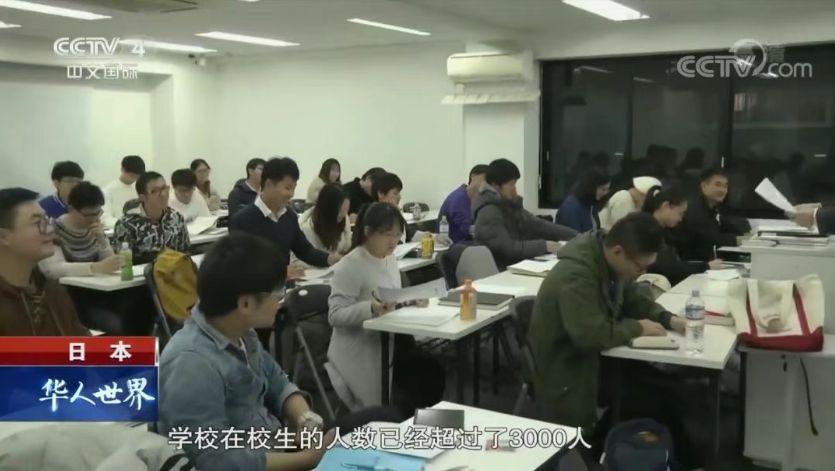 In 2012, Yang Ge, Lu Yang and Wu Hao graduated from university at the same time. Wu Hao took on the responsibility of returning to China to develop the Chinese market, while Yang Ge chose to enter a master's program at the University of Tokyo and stayed on the front line of admissions coaching for international students together with Lu Yang. Drawing on his own experience of getting into the University of Tokyo, Yang Ge also launched graduate school entrance exam coaching at Kochi Gakuen. However, a shortage of teachers and cramped classroom space brought the school's operations to a bottleneck. Yang Ge began searching everywhere for larger classrooms; in his words, for a period he was signing a new lease almost every month. In 2014, Yang Ge completed his studies at the University of Tokyo and began devoting all his time and energy to running Kochi Gakuen. By then, Kochi Gakuen had more than 1,000 enrolled students and had held the top market share for years. As the business grew, he could no longer handle every matter personally. To further ensure the quality of teaching, Yang Ge decided to formalize the school's operations: he began hiring full-time teachers, drew up company articles of association, and offered high salaries to recruit international students from Japan's top universities, most of whom were Kochi Gakuen graduates. All of this was because Yang Ge never forgot why he set out on this path in the first place: to help ambitious Chinese international students realize their dreams and enter Japan's leading institutions of higher learning.
A Pioneer in an Age of Fierce Competition
Yang Ge never forgot the stories of the many 18-year-old Chinese students who came to Japan to pursue their dreams only to see them shattered. He knew that if students studied Japanese and prepared for exams at the same time, concentrating their efforts to learn more efficiently, they could not only get into good universities but also save a precious year. To that end, in 2015 Yang Ge opened a language school and invited a professor from Hitotsubashi University to serve as its principal. During the screening interview by Japan's Ministry of Education, Culture, Sports, Science and Technology for the establishment of language schools, the interviewers were surprised that a young man in his twenties could found a language school, something unprecedented. One interviewer asked Yang Ge, "Why do you think you can do a good job in education?" Yang Ge replied: "First, I have extensive educational experience, and my work on the front line has made me keenly aware of the shortcomings of language schools, which I am willing to remedy through my own efforts. Second, the language school I am opening will serve only Chinese students; students with the same cultural background allow for higher teaching quality and efficiency. Finally, as a former Chinese international student myself, I understand better than anyone the urgent needs and aspirations of Chinese students and their parents to get into good universities." This answer, centered firmly on "education," won over the interviewers present, and Kochi Gakuen's language school opened successfully.
 Yang Ge has been able to keep the academy at the forefront of study-abroad education services throughout his ten years as an entrepreneur because he is willing to understand change and to change with it. The economic take-off of Chinese society has produced Chinese students with increasingly diverse interests and aspirations. In 2015, Kochi Gakuen launched coaching courses for art students, breaking with the old notion that art students coming to Japan could mostly only attend vocational colleges, and instead helping them with all its might to enter top art universities. Beyond continually improving Kochi Gakuen's teaching and business model, Yang Ge also sought to make the most of the admissions coaching expertise his team had accumulated over many years on the front line of education, publishing series of exam-preparation textbooks in China, Japan and even South Korea and filling the gap left by the absence of textbooks for students coming to study in Japan. At the same time, to address the difficulty international students face in finding jobs and staying in Japan after graduating from university, Yang Ge founded the "Shokutoku Nihon" brand in 2013 to help students solve their job-hunting problems.
The year 2018 marks the tenth anniversary of Kochi Gakuen's founding. Today, the academy enrolls more than 3,000 students a year, a scale widely recognized in Japan's education industry.
Yang Ge says: "Running Kochi Gakuen well, helping more Chinese students enter and be educated at Japan's top institutions, realize their own ideals and, after graduation, play an active role on the world stage, is proof both of the strength of Chinese students in Japan and of our motherland's development."