 Skip to main content


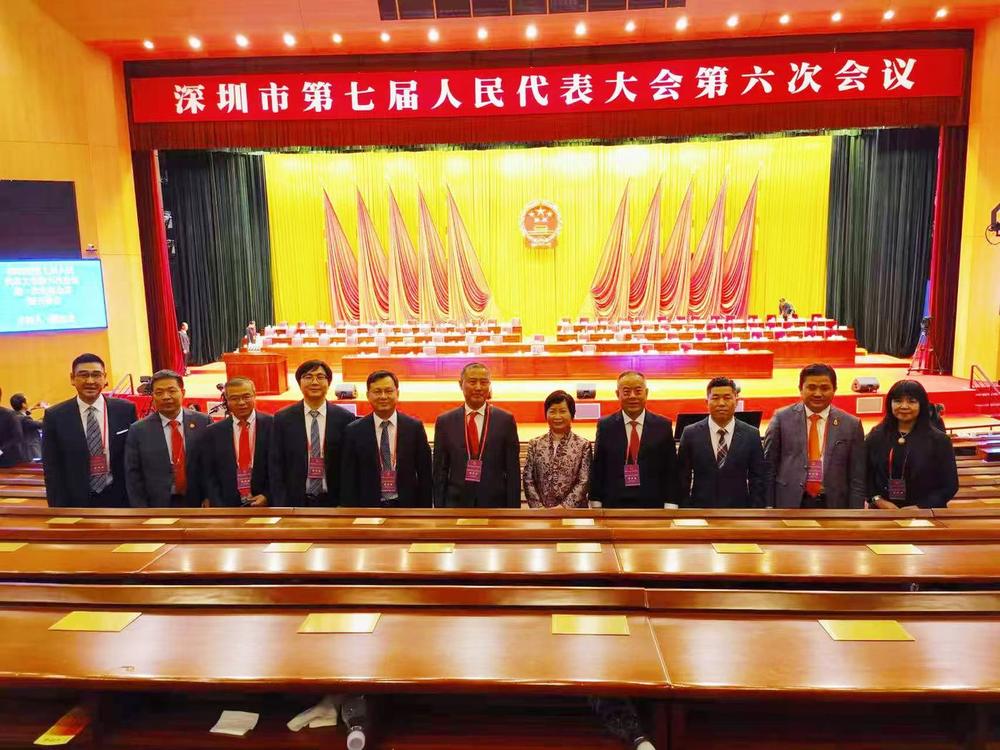
◆ Weng Daokui, President, Japan Shenzhen Economic, Trade and Cultural Promotion Association
The recent release of Shenzhen's "Work Plan for Accelerating the Development of a Modern International Metropolis (2025–2027)" marks the opening of a new chapter in the internationalization of this pioneering city of China's reform and opening-up. Amid profound adjustments in the global economic landscape, Shenzhen's internationalization not only concerns the transformation and upgrading of China's urban development model, but will also have a far-reaching impact on the economic landscape of the Asia-Pacific region. As a major Asian economy and an important economic and trade partner of Shenzhen, Japan plays a unique and crucial role in this process.
Japanese companies have a long history of investing in Shenzhen. Starting in the 1980s, Japanese companies such as Sony, Panasonic and Hitachi set up production bases in Shenzhen one after another, bringing advanced technology and management expertise to the development of Shenzhen's electronics manufacturing industry. Today, Japan is Shenzhen's third-largest source of foreign investment, with more than 1,000 Japanese-funded companies in the city, and investment has expanded from traditional manufacturing into high-end sectors such as finance, technology and services.
In technological innovation, cooperation between Shenzhen and Japan continues to deepen. Huawei's collaboration with NTT DOCOMO on 5G research and development, and joint research by Tencent and SoftBank in artificial intelligence, both demonstrate the close ties between the two sides in technological innovation. Such cooperation not only drives technological progress but also brings considerable economic benefits to companies in both places.
In cultural exchange, Shenzhen has established sister-city relationships with several Japanese cities and regularly holds cultural exchange events. Japanese anime, manga, design and other cultural elements are widely popular among young people in Shenzhen, while Shenzhen's culture of innovation is gradually becoming known in Japanese society.
Japanese companies value Shenzhen's complete industrial chain and innovation ecosystem. Shenzhen has a full industrial chain spanning R&D and design, production and manufacturing, and marketing and sales, providing a favorable environment for Japanese companies to grow. At the same time, Shenzhen's vibrant innovation culture and rich talent pool give strong support to Japanese companies' technological innovation.
In regional economic cooperation, Japan regards Shenzhen as an important gateway to the Guangdong-Hong Kong-Macao Greater Bay Area. By deepening cooperation with Shenzhen, Japanese companies can better integrate into the development of the Greater Bay Area and share in the dividends of regional growth. In finance and technology services in particular, Japanese companies see enormous opportunities.
In response to China's industrial upgrading, Japanese companies are also actively adjusting their strategies, extending from traditional processing and manufacturing into higher value-added areas such as R&D, design and brand management, and forming complementary partnerships with local Shenzhen companies.
Admittedly, China and Japan are to some extent competitors in technological innovation. In frontier fields such as artificial intelligence and new energy, companies on both sides want to take the lead. While such competition drives technological progress, it may also hinder deeper cooperation.
Management challenges arising from cultural differences cannot be ignored either. The meticulous management style of Japanese companies differs from Shenzhen's fast-paced, flexible business culture, which to some extent affects the efficiency of cooperation. Both sides need to strengthen communication and mutual understanding and build more inclusive models of cooperation.
To deepen cooperation, it is recommended that Shenzhen and Japan establish a regular exchange mechanism and strengthen policy coordination; encourage companies to form strategic alliances to jointly develop third-country markets; and strengthen talent exchanges to cultivate well-rounded professionals capable of cross-cultural management.
Against the backdrop of profound changes in the global economic landscape, cooperation between Shenzhen and Japan is of great strategic significance. By deepening cooperation, the two sides can not only achieve mutual benefit and win-win results, but also inject new momentum into economic integration in the Asia-Pacific region. Going forward, Shenzhen should continue to optimize its business environment and improve its innovation ecosystem to give Japanese companies broader room for development. At the same time, both sides should take a long-term view, strengthen cooperation in emerging fields such as the digital economy and the green economy, jointly address global challenges, and contribute to building an open world economy.