 Skip to main content


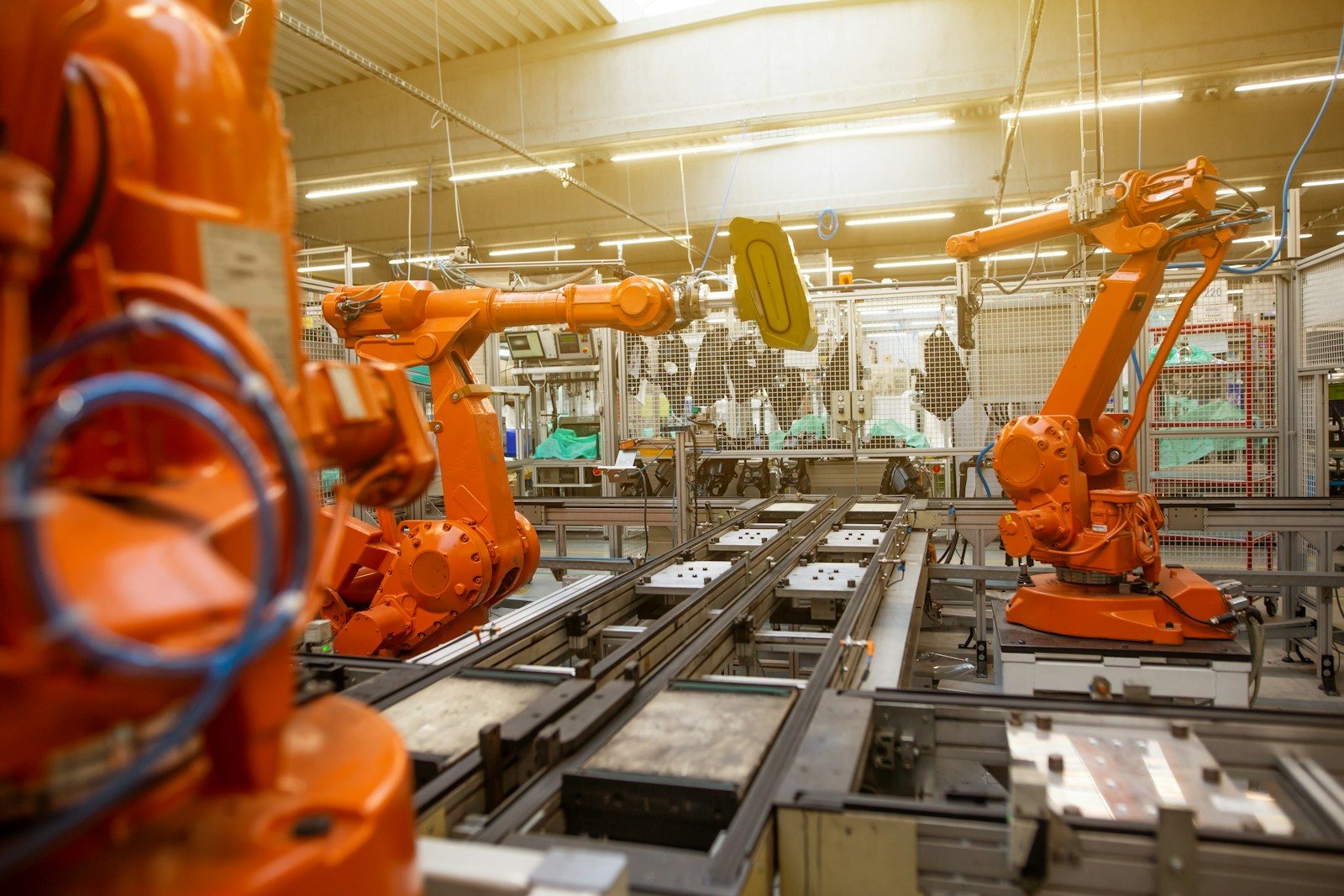
On December 19, 2025, organizers announced that the 2025 Robot Skills Competition will be held in Shenzhen's Longgang District on December 26-30. The news followed the December 13 launch of an AI robotic guide dog trial on the Shenzhen Metro and a framework for China's first "robot-friendly" demonstration zone, underscoring the city's push to put robots to work in real-world settings.
Overview
On December 19, 2025, a press conference in Shenzhen announced that the 2025 Robot Skills Competition will take place in the city's Longgang District for five days, from December 26 to 30. According to Xinhua, the competition is organized by Xinhua's brand office, Xinhua's Guangdong branch and Xinhuanet, and co-organized by the Longgang District Artificial Intelligence (Robot) Bureau. Supporting institutions include the Chinese University of Hong Kong, Shenzhen, and the Shenzhen Institute of Artificial Intelligence and Robotics for Society.
The announcement came amid a series of moves in Shenzhen to put robots to work in real-world settings. On December 13, the Shenzhen Metro began a trial of an AI-powered robotic guide dog, and on the same day Guangdong unveiled a framework for a "robot-friendly" demonstration zone.
Background
According to Xinhua, Shenzhen is home to more than 2,000 artificial intelligence companies and over 1,000 core robotics companies, which the city is nurturing under its "20+8" industrial cluster policy. Longgang District alone has more than 700 companies in the robotics industry chain. The district has released 677 application-scenario demands, matched 218 projects and generated cooperation worth more than 3 billion yuan.
Across Guangdong Province, industrial robot output accounts for more than 40% of the national total and has ranked first in China for five consecutive years. From January to October 2025, the province produced about 260,200 industrial robots and about 12.84 million service robots.
Humanoid robots are also moving toward commercial use. According to reports, transactional orders in China covered 5,700 humanoid robots in January-October 2025, and Shenzhen-based UBTech Robotics won an order worth 250 million yuan in September 2025, described as the largest single contract in the humanoid robot field worldwide.
Key Points
- Robot Skills Competition: Under the theme "Smart Creation for the Future, Skills Leading the World," the competition covers three application scenarios (industrial, medical and health, and emergency response) and six tracks: intelligent warehousing and logistics, high-precision industrial assembly, medical and elderly care, low-altitude applications, embodied intelligence systems, and robot art performance. Entries are judged through both technical plan reviews and practical scenario assessments, and side events include industry-academia-research matchmaking and technology transfer talks.
- Robotic guide dog on the metro: The trial began on December 13 at the Huangmugang transport hub in Futian District. Nicknamed "Xiaosuan" ("Little Garlic"), the device is described by Shenzhen Metro as a first for the global rail transit industry. Passengers use voice commands to be guided to service points, and the robot offers route planning, obstacle avoidance and tactile-paving tracking. Dedicated staff will accompany users for the first month, and the service may be extended to other stations depending on results. All 485 Shenzhen Metro stations already have full barrier-free facilities.
- Robot-friendly demonstration zone: At the Guangdong-Hong Kong-Macao Greater Bay Area AI and Robotics Industry Conference, held in Guangzhou on December 12-14, Guangdong released a "1+1+N" framework for embodied-intelligence training grounds, with the main training ground located in Shenzhen's embodied intelligence demonstration area. After closed training, robots will train on open streets in neighborhood blocks to experience real-world conditions.
Implications for Japan-Shenzhen Exchange
Japan has many companies with long track records in industrial robotics, while Guangdong, centered on Shenzhen, has become a major robot production base. Elderly care, healthcare, accessibility and logistics are also areas of strong demand in Japan's aging society, so Shenzhen's real-world trials are likely to draw interest from Japanese stakeholders.
At the same time, deploying robots in public spaces requires safety verification, consideration for users and supportive regulations. How Shenzhen conducts these trials and what challenges emerge may offer useful reference points for Japanese companies and local governments.
Outlook
The Robot Skills Competition runs from December 26 to 30 in Longgang District. After the one-month trial, Shenzhen Metro will decide whether to expand the guide dog service to other stations. The opening date and specific area of the robot-friendly demonstration zone have not yet been announced.
From the Association
The Association will continue to follow developments in robotics and AI in Shenzhen, and will strive to share information that supports exchange between companies and research institutions in Japan and Shenzhen.
Sources
This article is based on publicly available information and is provided for reference only; accuracy and completeness are not guaranteed.